TLDR
The ZYC SIMPO 5000, PowerPlus Energy LiFe4851 and Pylontech US5000 are modular lithium iron phosphate batteries built for low voltage solar storage systems.
The ZYC SIMPO 5000 and PowerPlus LiFe4851 each provide 5.12 kWh of nominal storage per module. PowerPlus recommends 4.608 kWh of usable capacity from the LiFe4851, while the Pylontech US5000 provides 4.8 kWh of nominal storage and 4.56 kWh of usable storage per module.
There is no single best battery for every property. The right choice depends on daily energy use, peak demand, inverter compatibility, available installation space and future storage requirements.
Choosing an off grid battery affects how reliably your property operates at night, through poor weather and during periods of high demand. Three products commonly considered for Australian solar systems are the ZYC SIMPO 5000, PowerPlus Energy LiFe4851 and Pylontech US5000.
All three use lithium iron phosphate chemistry, also known as LFP or LiFePO4. Their modular designs allow several battery units to form a larger storage bank.
The specifications appear similar at first. Clear differences emerge when you compare usable energy, output current, physical format, communication requirements and expansion limits.
ZYC SIMPO 5000 vs PowerPlus LiFe4851 vs Pylontech US5000 Comparison at a Glance
| Feature | ZYC SIMPO 5000 | PowerPlus LiFe4851 | Pylontech US5000 |
| Battery chemistry | LiFePO4 | LiFePO4 | LiFePO4 |
| Energy per module | 5.12 kWh | 5.12 kWh nominal | 4.8 kWh nominal |
| Usable energy | 5.12 kWh published | 5.12 kWh published; 4.608 kWh recommended | 4.56 kWh |
| Nominal voltage | 51.2 V | 51.2 V | 48 V |
| Continuous current | 100 A | 120 A maximum discharge | 100 A normal |
| Peak current | 200 A for 5 seconds | 150 A for 30 seconds | Up to 200 A for 15 seconds |
| Weight | 44 kg | 43 kg | 39.7 kg |
| Format | 3U rack module | 3RU rack module | 4U rack module |
| Communication | CAN or communication free mode | CAN and RS485; managed or self managed | CAN and RS485 |
| Published scalability | Up to 80 modules | Up to 20 modules in parallel | Up to 16 modules per string |
| Installation rating | Check current product documentation | IP20 | IP20 |
These figures are based on published product information. Final battery output and usable storage depend on the approved inverter, battery controls and completed system design.
ZYC SIMPO 5000 Off Grid Battery Overview
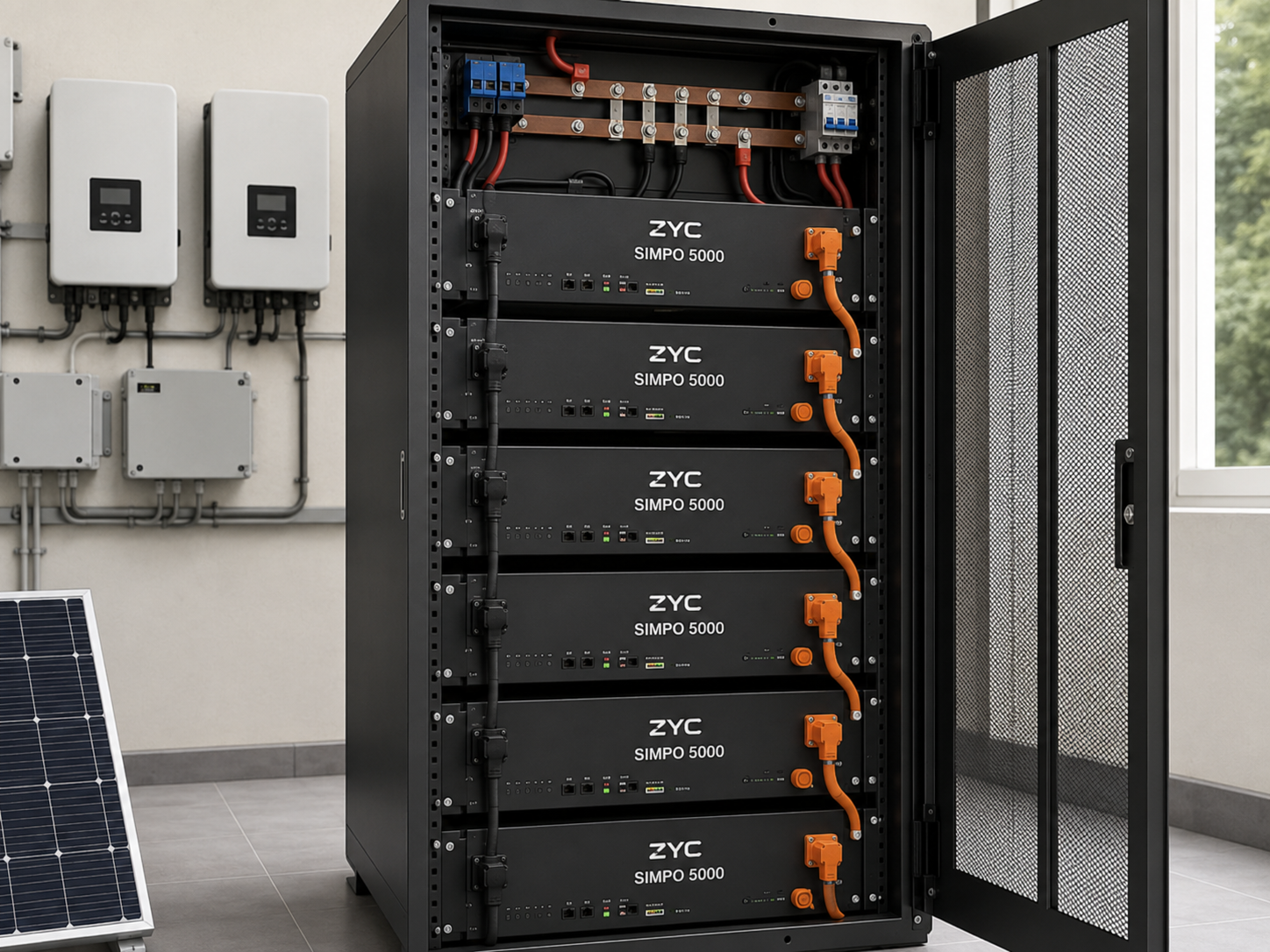
The ZYC SIMPO 5000 off grid battery is a 51.2 volt LFP battery with 5.12 kWh of storage per module.
Each battery uses a standard 19 inch, 3U rack format. ZYC lists a continuous current of 100 amps and peak current of 200 amps for five seconds.
The battery supports CAN communication and a communication free operating mode. This gives system designers different integration options when working with approved inverter platforms.
ZYC also supplies cabinet configurations for six or ten modules. The rack format keeps the equipment organised and supports a clean connection layout in larger battery banks.
The SIMPO 5000 stands out for its large expansion capacity. ZYC states that the battery supports up to 80 modules in parallel under its specified configuration.
Its rack format suits systems that need substantial storage or planned expansion. The 100 amp continuous current rating also gives each module strong output for properties using pumps, refrigeration, compressors or workshop equipment.
A larger battery bank requires correct engineering. The cabinet, cables, busbars and protection equipment must handle the total current available from the completed system.
Stand Alone Power Systems also covers the product in its SIMPO 5000 modular battery guide .
PowerPlus Energy LiFe4851 Off Grid Battery Overview
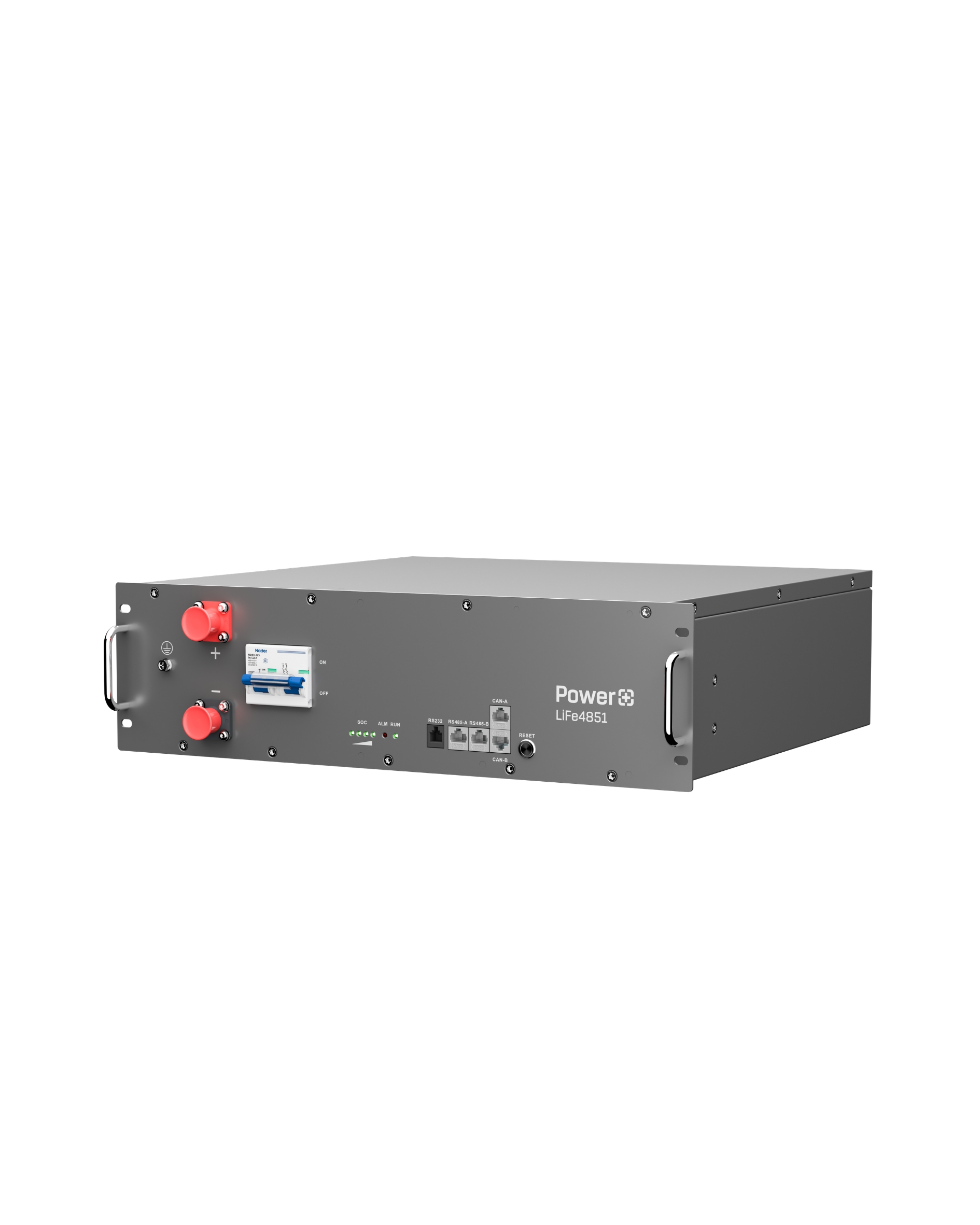
The PowerPlus Energy LiFe4851 is a 51.2 volt LFP battery with 5.12 kWh of nominal capacity per module.
PowerPlus lists 5.12kWh of total usable capacity, while recommending that normal system design use 4.608kWh per module, based on a 90 per cent recommended depth of discharge.
Each battery uses a 3RU rack format, weighs 43 kilograms and includes an integrated two pole 125 amp DC circuit breaker. PowerPlus lists a maximum continuous discharge current of 120A and a peak discharge current of 150A for 30 seconds.
The LiFe4851 can operate in managed mode through CANBus communication with a compatible inverter or in self managed mode without active battery to inverter communication. CAN and RS485 interfaces are built into the battery.
The battery itself is rated IP20 and must be installed in a protected location. Outdoor installation requires a suitably rated enclosure, with PowerPlus recommending a minimum IP54 enclosure.
PowerPlus LiFe4851 Current Output, Protection And Inverter Modes
The LiFe4851 combines a compact 3RU format with high published current capability, integrated protection and flexible managed or self managed operation.
PowerPlus states that up to 16 LiFe4851 modules can be connected in parallel. This allows the battery bank to expand from a single 5.12 kWh module to a larger residential or small commercial storage system when the complete design supports it.
The battery is engineered, tested and assured in Australia for Australian conditions. The current manufacturer specification states that it is manufactured in China, so it should not be described as Australian made.
For current product details and downloads, see the PowerPlus Energy LiFe4851 product page. The exact inverter model, firmware and system configuration must match the current approved documentation.
Pylontech US5000 Overview
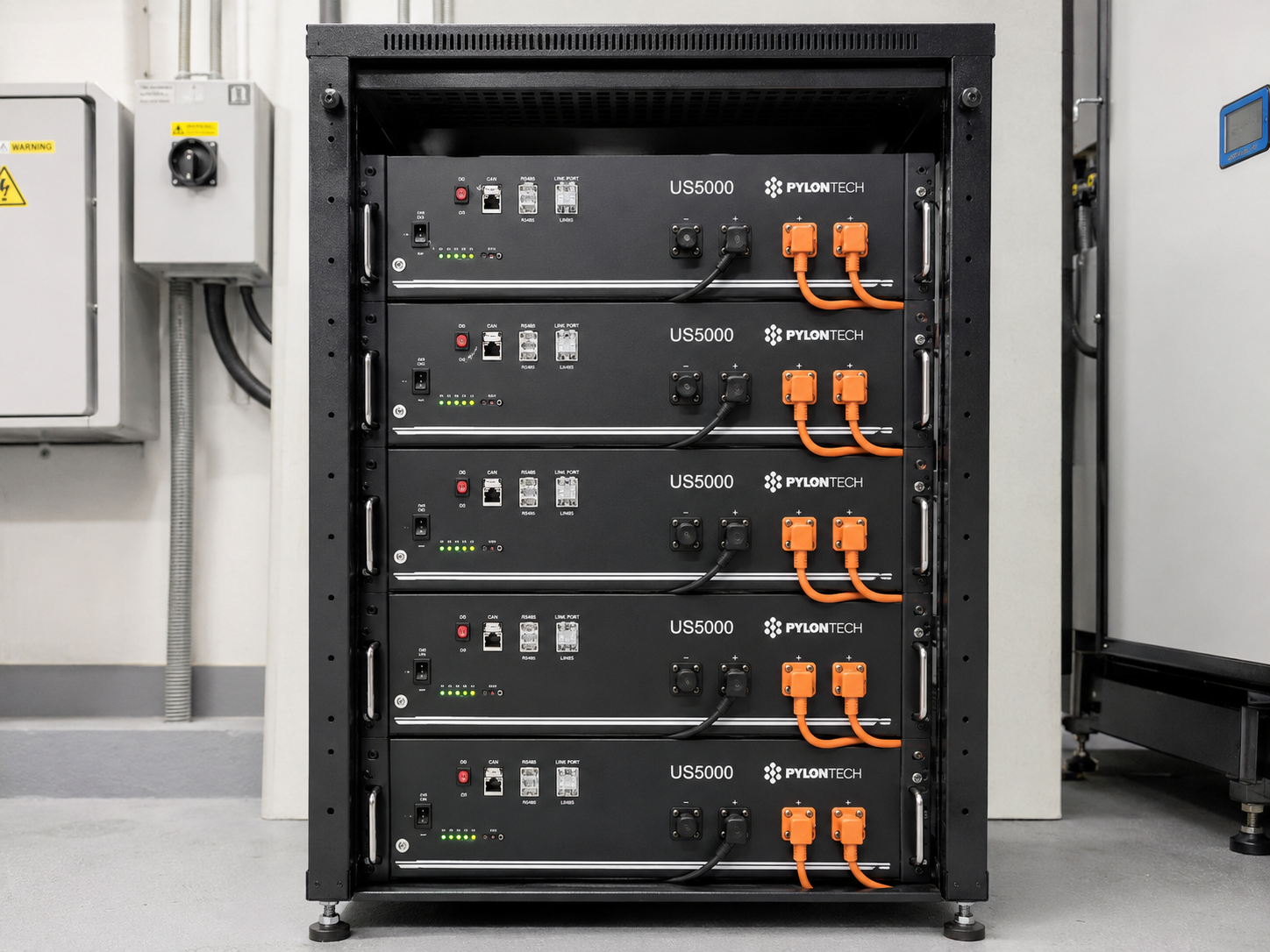
The Pylontech US5000 off grid battery is a 48 volt LFP battery with 4.8 kWh of nominal capacity and 4.56 kWh of usable capacity per module.
Pylontech lists a normal charge and discharge current of 100 amps. The battery also supports higher current for limited periods.
Each unit weighs about 39.7 kilograms and fits a standard 19 inch rack. The US5000 provides CAN and RS485 communication for approved inverter integrations.
A single string supports up to 16 modules, giving one string a nominal storage capacity of 76.8 kWh.
Where the Pylontech US5000 Stands Out
The US5000 has a compact rack format and an established presence across residential and off grid storage systems.
Its 4.8 kWh module size supports gradual expansion in predictable steps. Support for up to 16 batteries in one string covers many rural homes, cabins, sheds and smaller businesses.
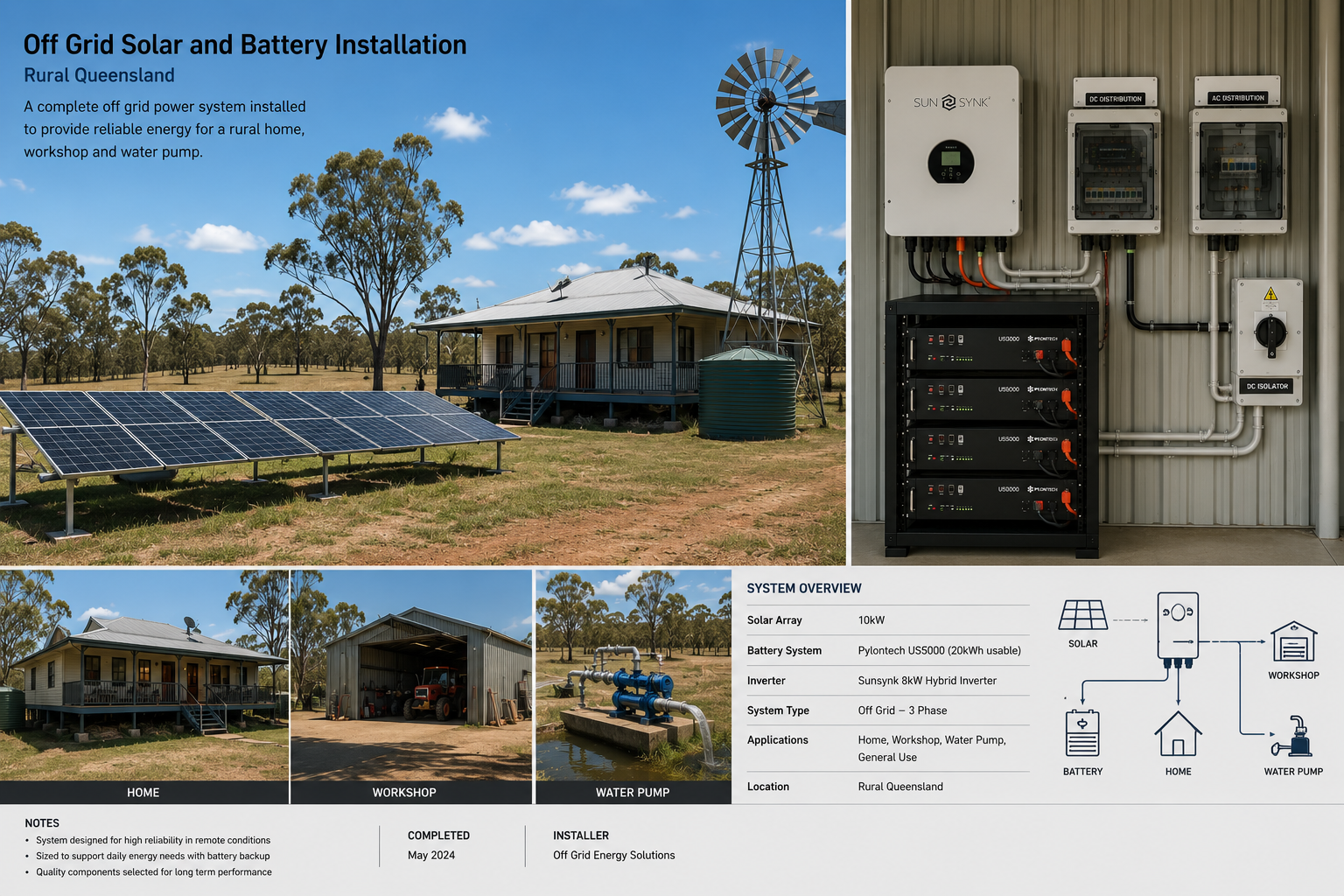
A real installation example appears in the Millmerran Woods off grid solar case study , which includes 20 kWh of Pylontech battery storage.
Which battery provides the most storage per module
The ZYC SIMPO 5000 and PowerPlus LiFe4851 share the highest nominal energy per module in this comparison at 5.12 kWh.
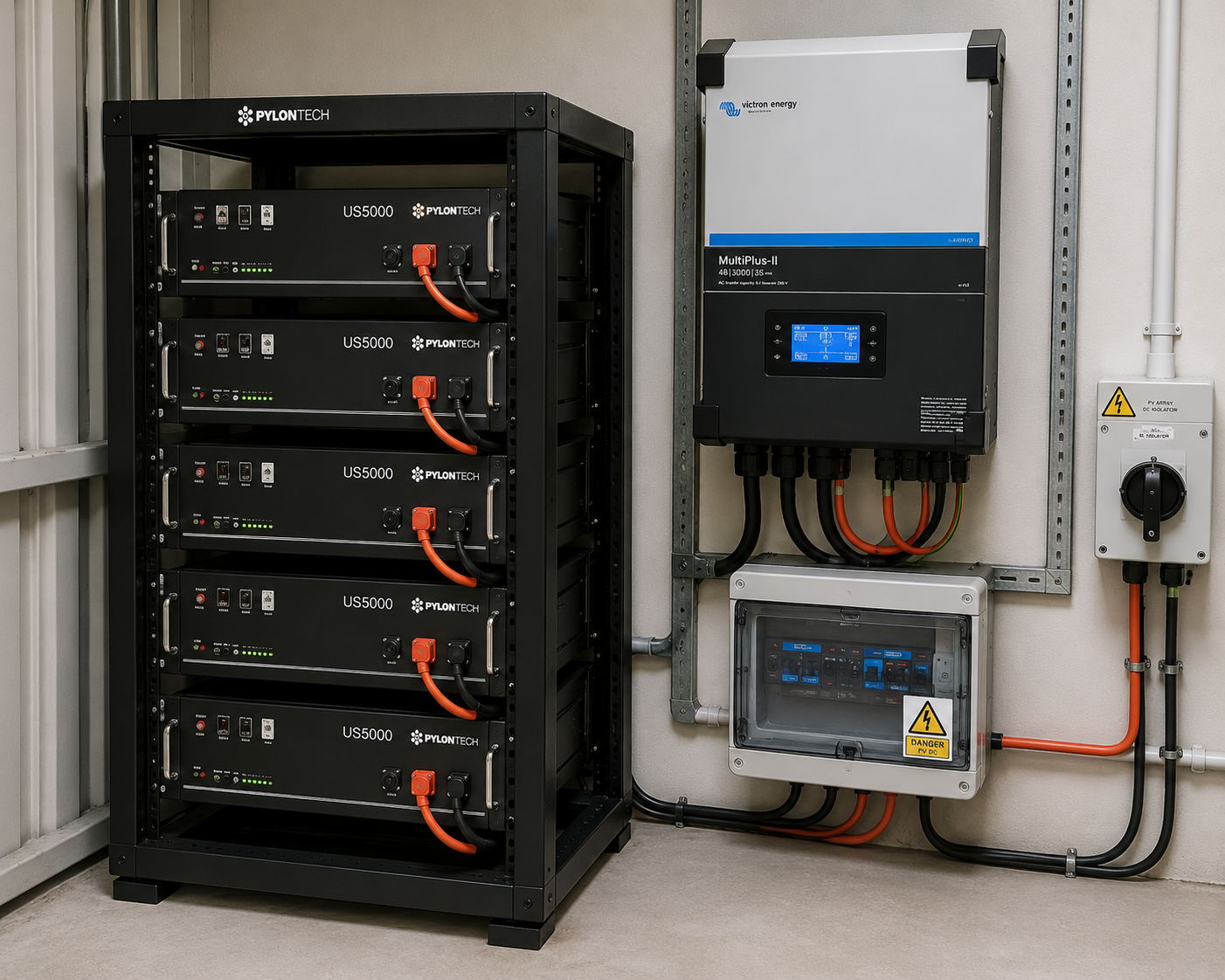
PowerPlus recommends 4.608 kWh of usable capacity from the LiFe4851. The Pylontech US5000 provides 4.8 kWh of nominal capacity and 4.56 kWh of usable capacity.
The difference remains small across one module. Across a larger bank, it affects the total number of batteries required.
Storage per module should not decide the system on its own. The final battery bank must cover the property’s daily use, overnight demand and required backup period.
Which Battery Is Easiest to Expand
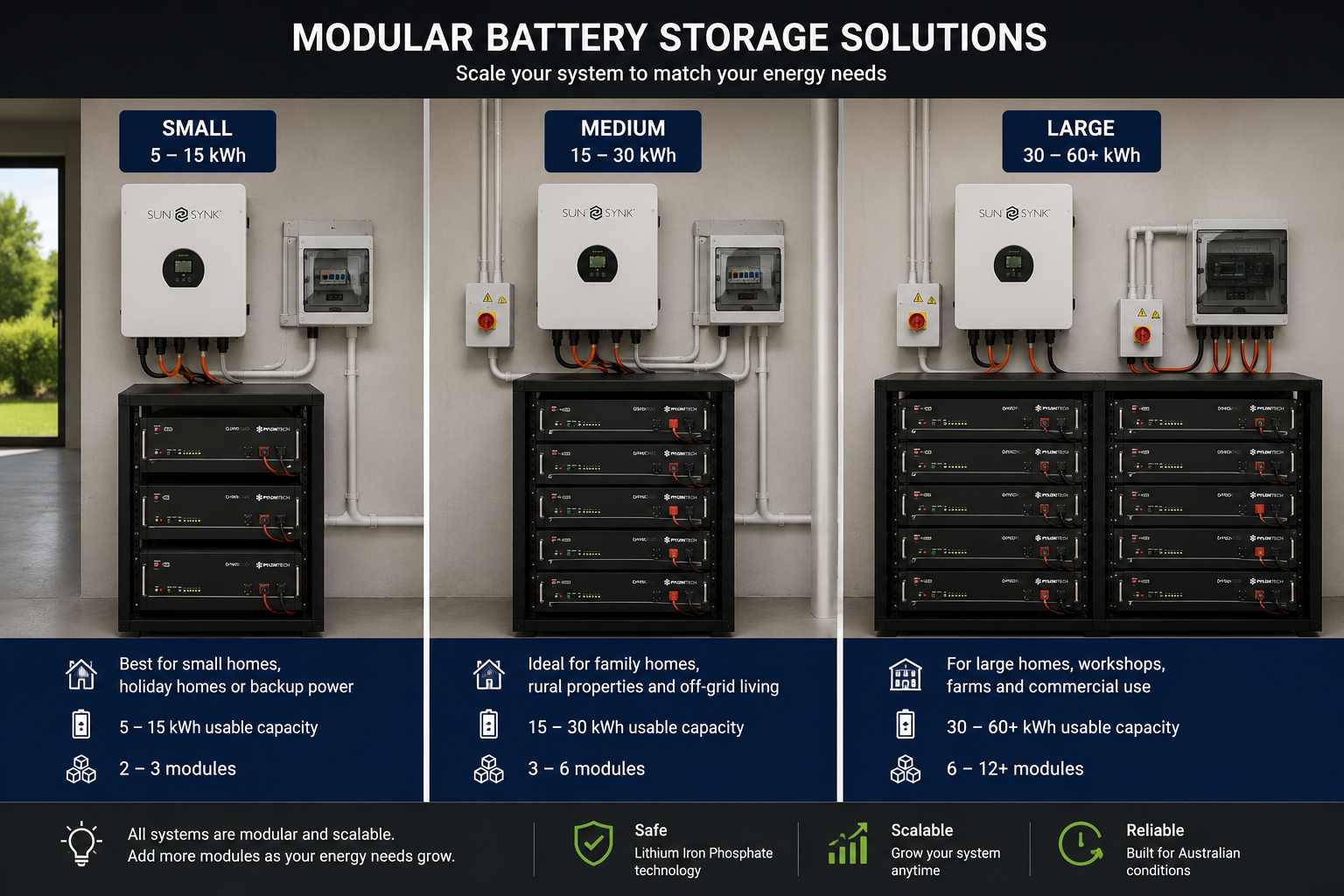
All three products use modular construction, but their expansion limits differ.
ZYC’s current product page states that the SIMPO 5000 supports up to 80 modules in parallel, subject to the manufacturer’s specified system design.
The PowerPlus LiFe4851 supports up to 16 modules connected in parallel with coordinated CANBus communication.
The Pylontech US5000 supports up to 16 modules in one string. Larger arrangements must follow Pylontech’s approved system architecture.
These limits do not mean every installation should use the maximum number of batteries. The inverter, charging equipment, cables and protection system also set practical boundaries.
Expansion works best when it forms part of the original off grid solar system design . This allows suitable space, electrical capacity and connection points to be included from the beginning.
Which battery suits high power loads
Battery capacity measures how much energy is stored. Output current measures how quickly the battery supplies that energy.
The SIMPO 5000 publishes a continuous current rating of 100 amps. The PowerPlus LiFe4851 publishes a maximum continuous discharge current of 120A, while the Pylontech US5000 lists 100A as its maximum continuous current. The applicable system output will still depend on the number of modules, inverter limits, battery controls and completed electrical design. The Pylontech US5000 lists 100 amps as its normal charge and discharge current.
These figures do not establish one overall winner. Adding modules increases the available output from the battery bank. The inverter also limits how much power reaches the property.
A home running standard appliances places different demands on a battery bank than a farm operating bore pumps and compressors. Correct sizing starts with the startup current and running demand of the largest equipment.
Best Off Grid Battery For Queensland Homes, Farms And Sheds
The ZYC SIMPO 5000 suits systems that require large scale expansion, a standard rack format and high published current per module.
The PowerPlus LiFe4851 suits systems that benefit from a compact 3RU format, integrated DC protection and the choice of managed or self managed operation.
The Pylontech US5000 suits compact rack installations that require gradual expansion through an established product range.
From our experience designing and installing off grid systems, the best battery is not necessarily the one with the highest individual specification. Inverter compatibility, serviceability, warranty support, replacement availability, installation space and performance across the complete battery bank all affect the final choice.
The battery must also suit the property’s energy use, peak loads, charging equipment and plans for future expansion. This is why battery selection should form part of the complete off grid system design rather than being based on capacity or current ratings alone.
Before approving a battery, check that the model appears on the Clean Energy Council approved battery list . Inclusion confirms the product meets the program’s requirements, but it does not replace professional system design.
Choose the Battery as Part of the Complete System
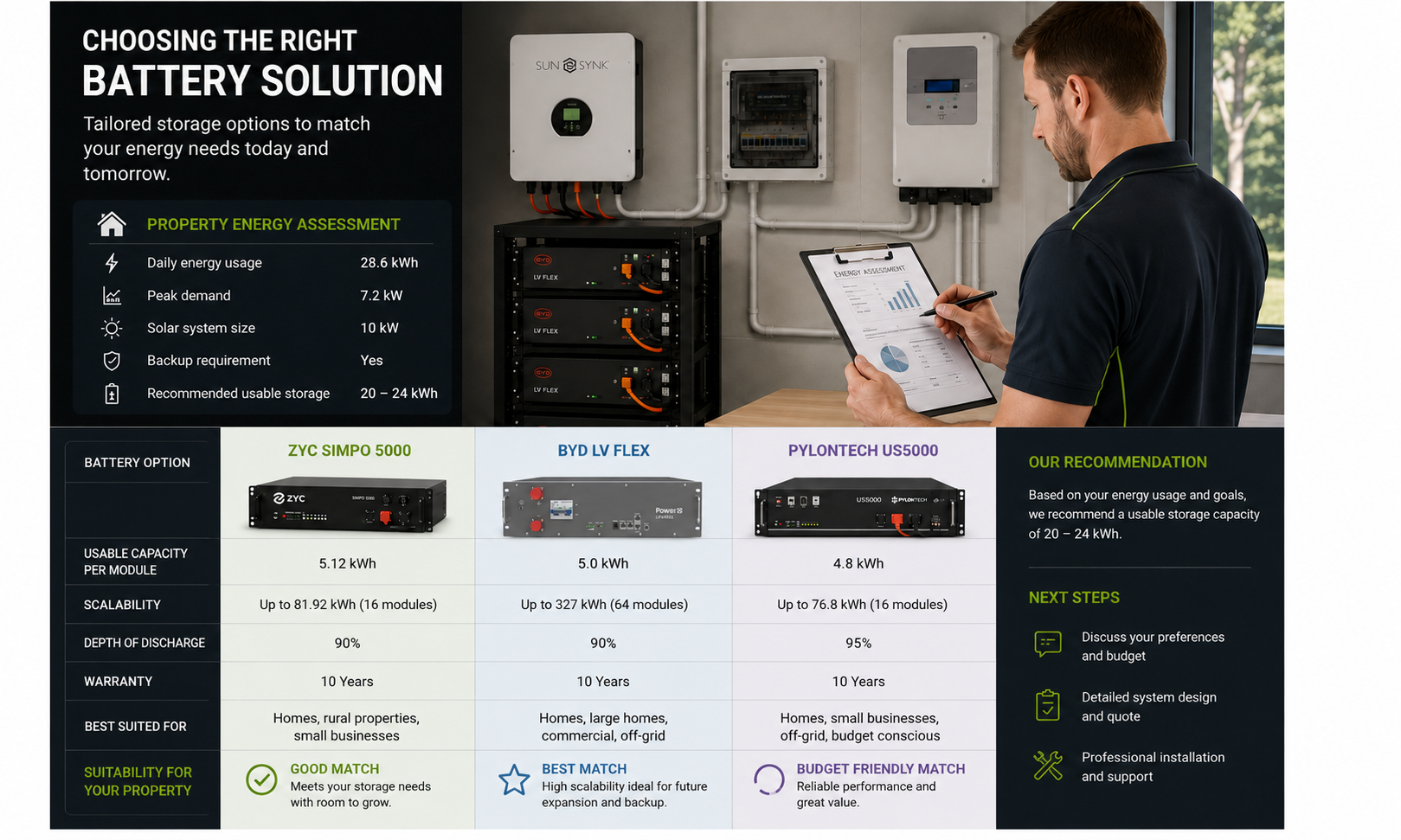
The ZYC SIMPO 5000, PowerPlus LiFe4851 and Pylontech US5000 each provide modular LFP storage for off grid solar systems.
The SIMPO 5000 and LiFe4851 each provide 5.12 kWh of nominal storage per module. The SIMPO 5000 has the largest stated expansion limit in this comparison, while the LiFe4851 provides integrated protection, up to 20 parallel modules and 4.608 kWh of recommended usable capacity. The US5000 provides 4.56 kWh of usable storage in a 4U rack format.
Battery selection comes after the property load assessment. The final design must account for solar generation, inverter output, generator controls and the way electricity is used throughout the day.
Stand Alone Power Systems designs and installs complete off grid solar and battery systems for homes, farms, sheds and remote businesses across Queensland and Northern New South Wales. The company has operated since 2006 and provides design, installation, upgrades, maintenance and technical support.
Contact Stand Alone Power Systems to compare battery options and request a system design based on your property’s power requirements.
Frequently asked questions
Are all three products lithium batteries?
Yes. The ZYC SIMPO 5000, PowerPlus LiFe4851 and Pylontech US5000 use lithium iron phosphate battery chemistry.
LFP chemistry is widely used for stationary solar storage. Each battery still requires approved charging settings, compatible equipment and professional installation.
Can these batteries work with Selectronic or Victron inverters?
Compatibility depends on the exact battery model, inverter model, firmware and system configuration.
Manufacturers publish compatibility documents that identify supported combinations. The installer must check the current documentation before equipment is ordered.
Brand level compatibility does not confirm that every model from the same manufacturer works together.
How many batteries does an off grid home need?
The number of modules depends on daily electricity use, overnight demand and the required backup period.
A battery bank close to 20 kWh requires about four modules from each of these ranges. Four SIMPO modules provide 20.48 kWh. Four LiFe4851 modules provide 20.48 kWh nominal and 18.432 kWh of recommended usable capacity. Four Pylontech US5000 modules provide 19.2 kWh nominal and 18.24 kWh usable.
Battery quantity must also supply enough current for the property’s peak loads.
Can more batteries be added later?
Yes, when the expansion follows the manufacturer’s requirements.
Battery age, state of charge, firmware and connection method affect the process. Planning expansion during the first installation creates a safer and cleaner upgrade path.
Does a larger battery remove the need for a generator?
No. Generator requirements depend on the property’s energy use, solar array and required backup during extended poor weather.
Extra battery storage only reduces generator use when the solar array produces enough energy to recharge the larger bank.
Which battery takes up the least space?
The answer depends on the required total storage, cabinet size and system layout.
The Pylontech US5000 uses a 4U rack format. The SIMPO 5000 and PowerPlus LiFe4851 use 3U formats. Module height alone does not reveal the complete footprint because cabinets, clearances, cables and protection equipment also require space.