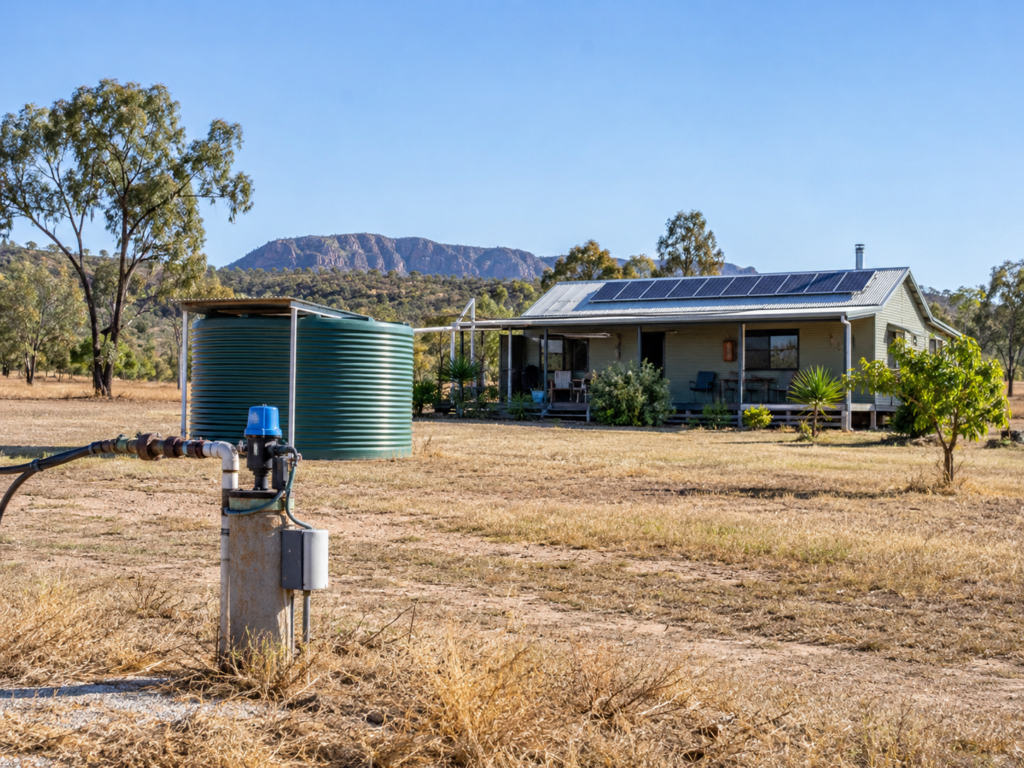
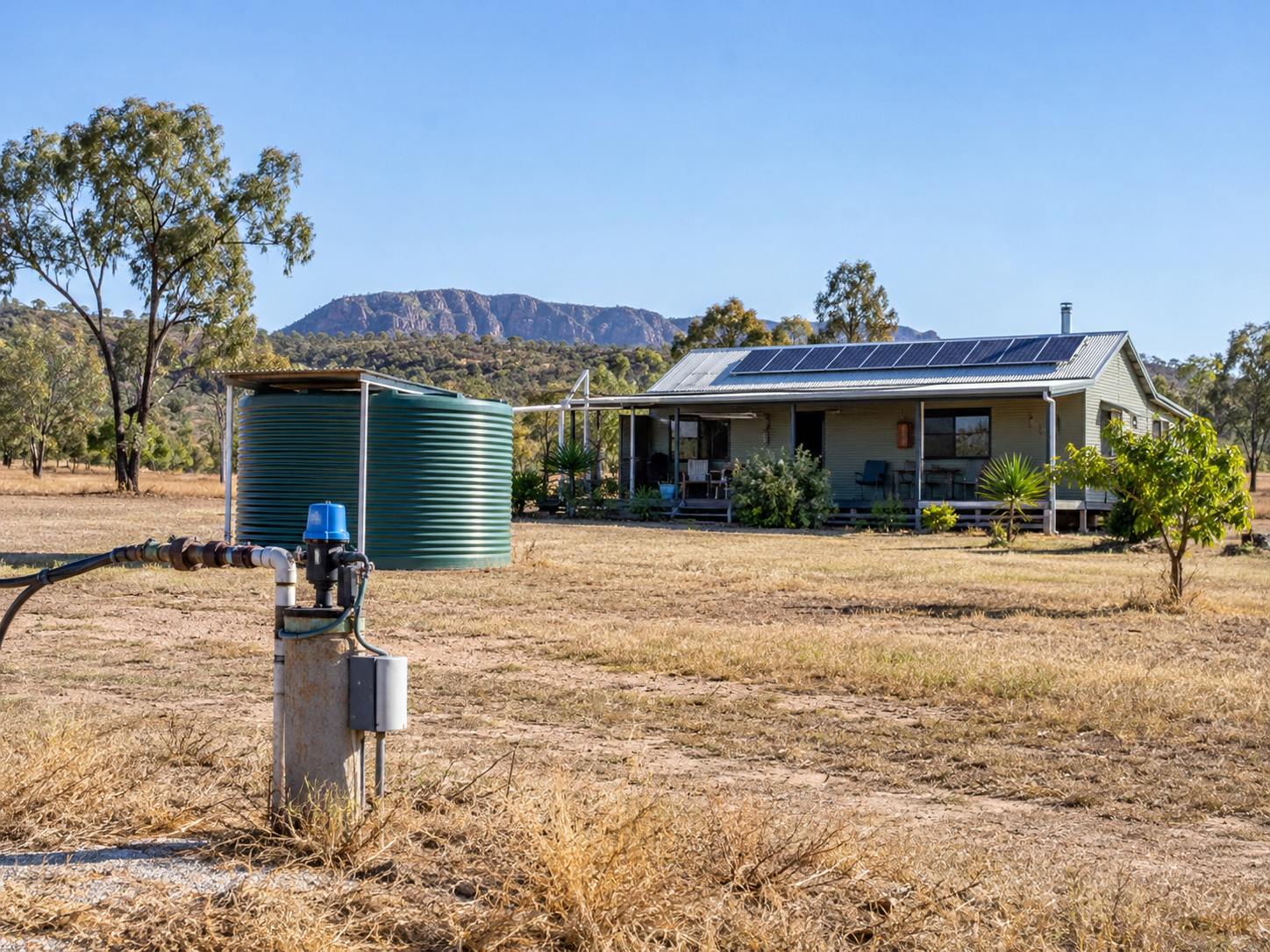
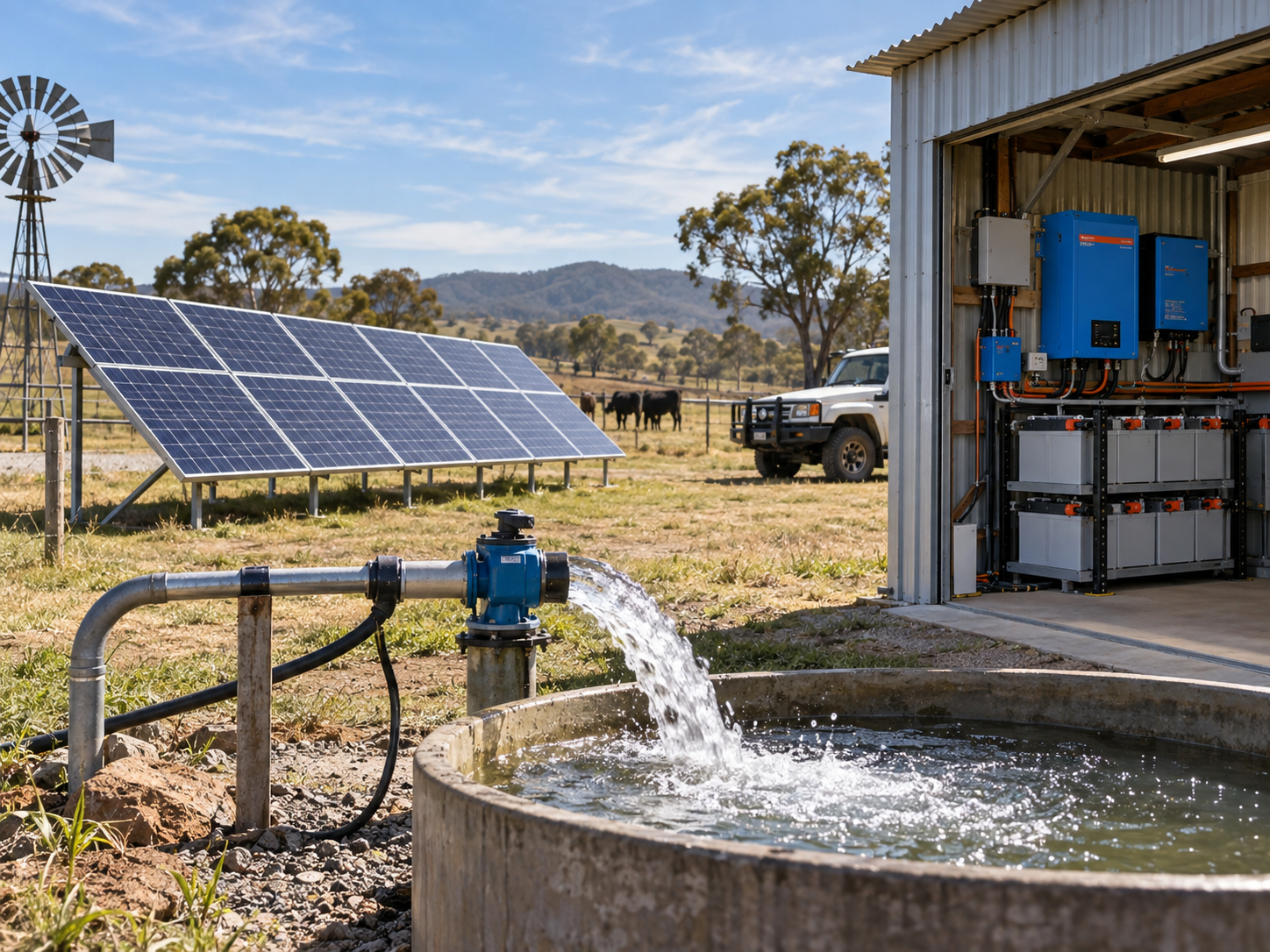
Off grid solar design changes quickly once bore pumps become part of the load. When we design a system for a rural property, we don’t just look at how much energy the pump uses across a day. We also look at what happens when it starts, how long it runs, when it runs and what else may be operating at the same time.
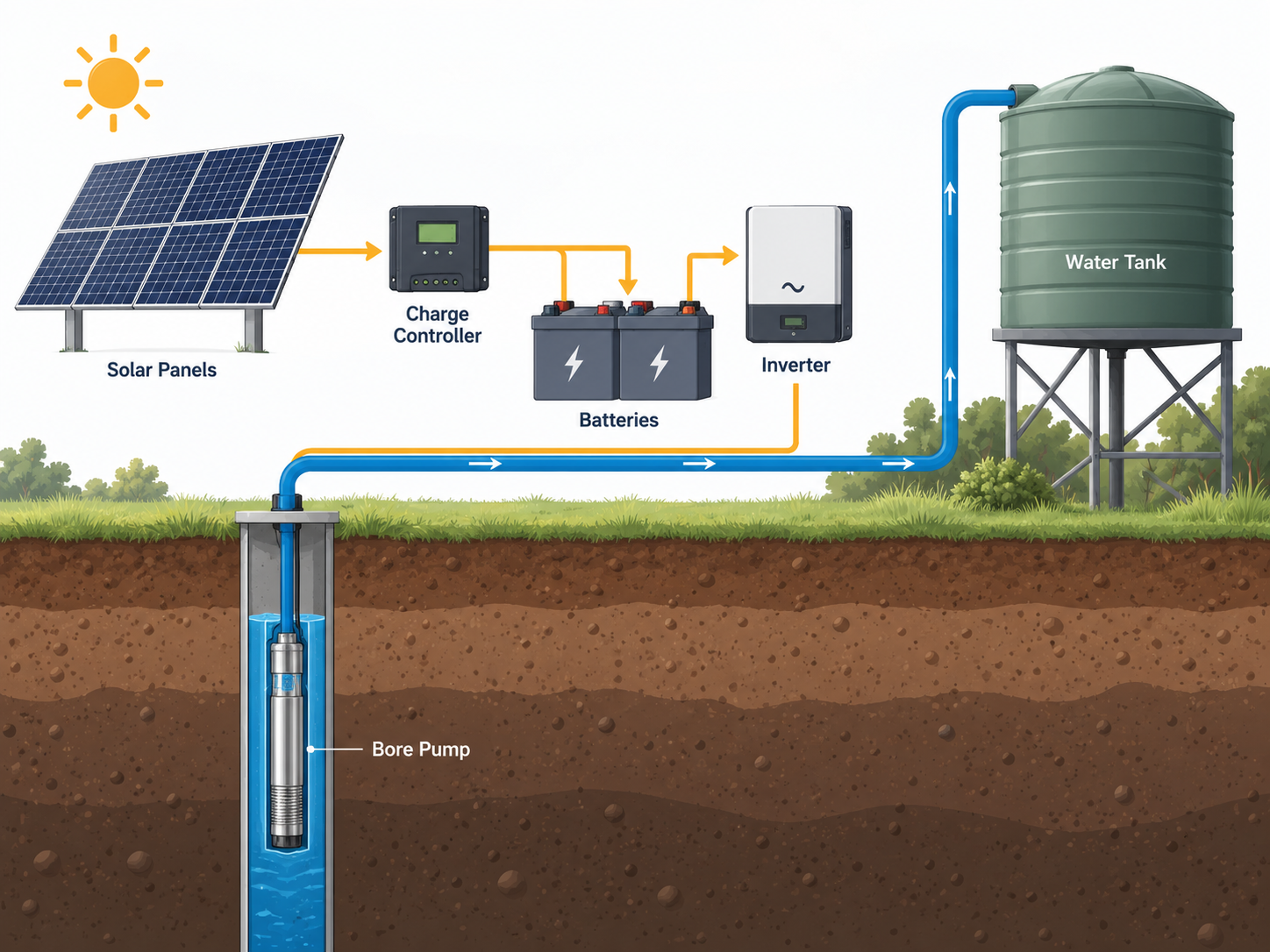
Here, we’re talking specifically about bore pumps operating as part of a property’s complete off grid power system, rather than a dedicated solar bore pump setup with its own panels and controls. Those details can affect the inverter, batteries, solar generation and generator strategy.
We’ve worked on rural systems where water pumps sit alongside household loads, workshops and refrigeration, so we prefer to bring the water system into the design early rather than make the electrical system catch up later.
Key Takeaways
When we add bore pumps to an off grid property, we plan for more than the pump’s running wattage. Key considerations include:
- Start-up demand because pumps can draw significantly more power when they first switch on.
- Run time and pumping schedule to understand when and how long the pump will place demand on the system.
- Inverter sizing so the system can handle both start-up and operating loads.
- Battery storage and solar capacity to support pumping without placing unnecessary pressure on stored energy.
- Daytime pumping where possible, as running the pump during strong solar production can reduce battery use.
- Water storage tanks to help shift pumping away from periods of peak electrical demand.
- Generator backup where extended poor weather or high water use may create additional demand.
- Future property loads such as irrigation, stock watering, sheds or workshop equipment, which can increase system requirements over time.
1 Bore Pumps Change Your Peak Power Demand
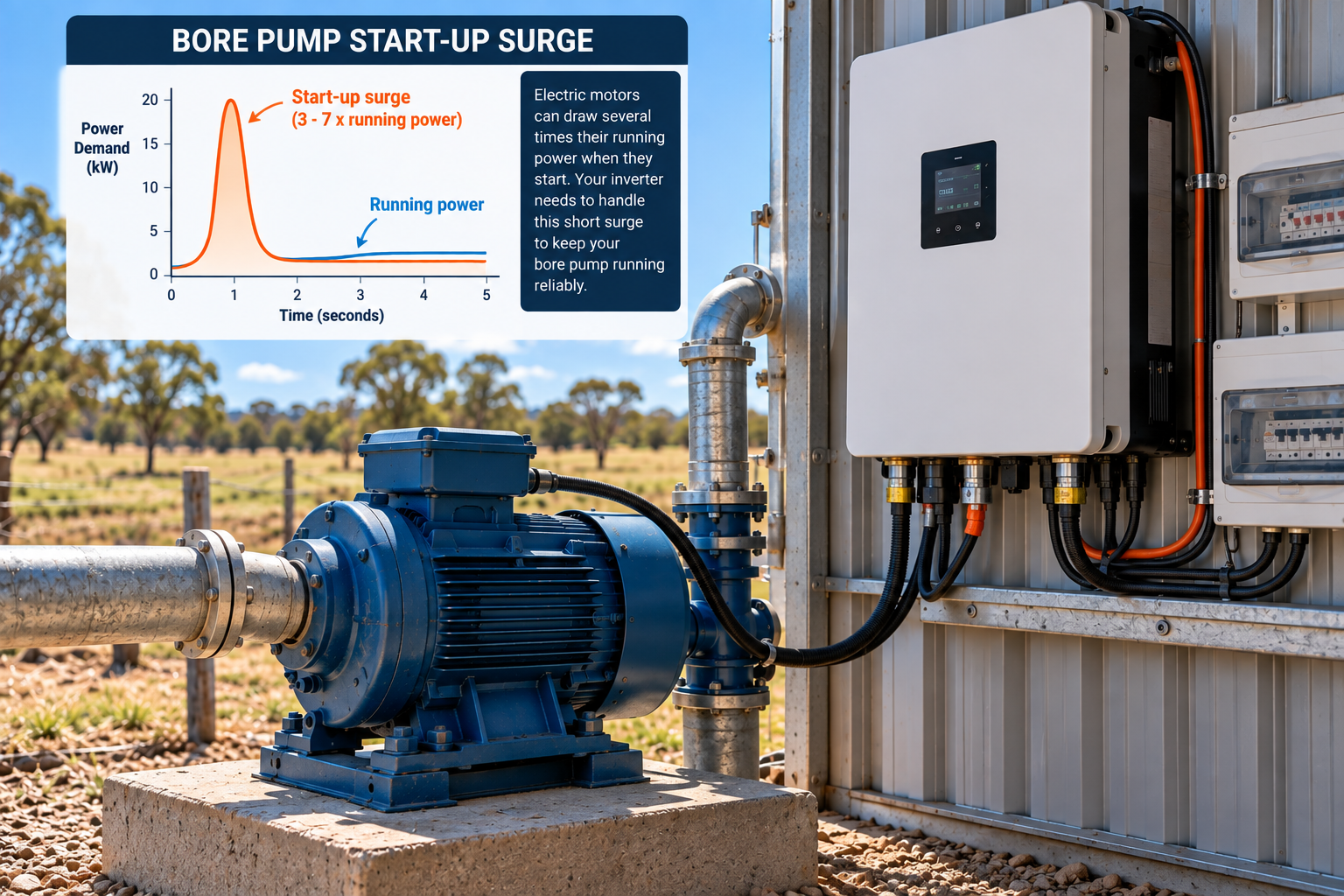
When we assess bore pumps, running power is only part of the story. Electric motors can draw a much higher starting current for a short period when they switch on.
This brief surge can exceed the inverter’s continuous output, so the inverter must have enough surge capacity to handle the pump’s start-up demand as well as its normal running load.
Australian Government guidance on motors and variable speed drives notes that motor sizing should consider both running load and the power needed to start equipment.
In an off grid system, that matters because there isn’t a large utility grid behind the inverter to absorb sudden demand. We check the pump model, motor type, starting method and likely overlap with loads such as refrigeration, air conditioning, compressors or workshop tools.
2 Starting Method Can Change Inverter Sizing
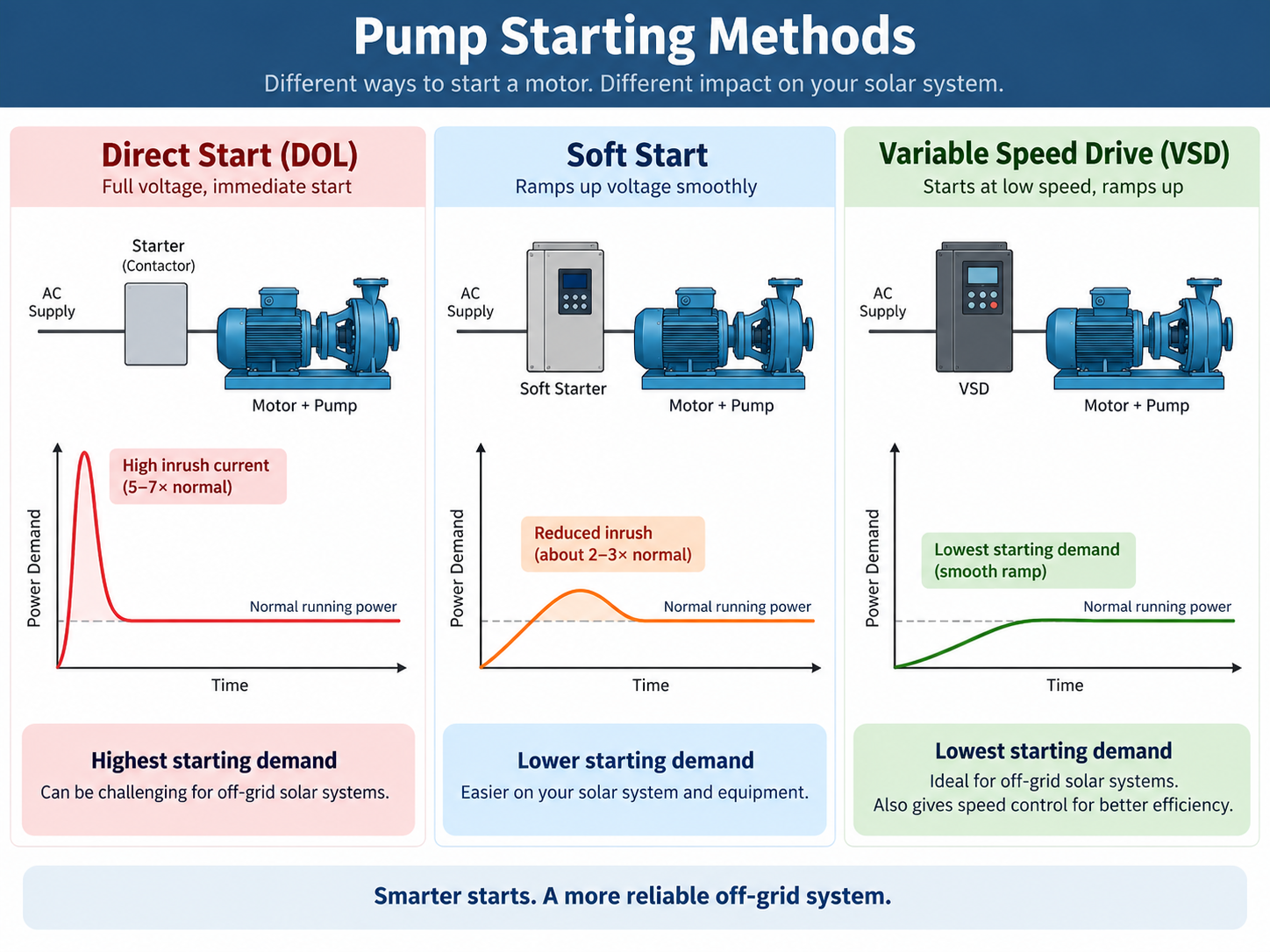
Different starting methods can create very different demands on the inverter, so we don’t treat every pump as though it starts the same way.
Some motors start directly and create a sharp surge, while others use soft starters or variable speed drives that can reduce maximum demand and provide more control.
That doesn’t mean a variable speed drive is automatically right for every bore. We still need to understand pump duty, motor compatibility, head pressure, water demand and controls.
For us, good inverter sizing starts with the exact equipment rather than a rough kilowatt number. We want to know what the pump does when it starts, how it behaves while running and what other heavy loads may operate beside it.
3 Pump Run Time Changes Battery Storage Needs
How does bore pump run time affect battery storage? The longer the pump operates, especially outside strong solar production periods, the more stored energy the system may need to provide.
A pump that briefly tops up a tank is very different from one running for hours for irrigation, stock water or household supply. If pumping happens while solar production is strong, more of the pump’s energy demand may be supplied by available solar generation rather than drawing as heavily on stored battery energy.
If it runs before sunrise, overnight or after cloudy days, the batteries carry more of the job. Our guide on what size off grid solar system you need follows the same principle. We size from real daily consumption, peak demand and future loads rather than choosing equipment first.
4 Pump Timing Can Make the Whole System Easier
We often look at when the pump operates before simply adding more equipment.
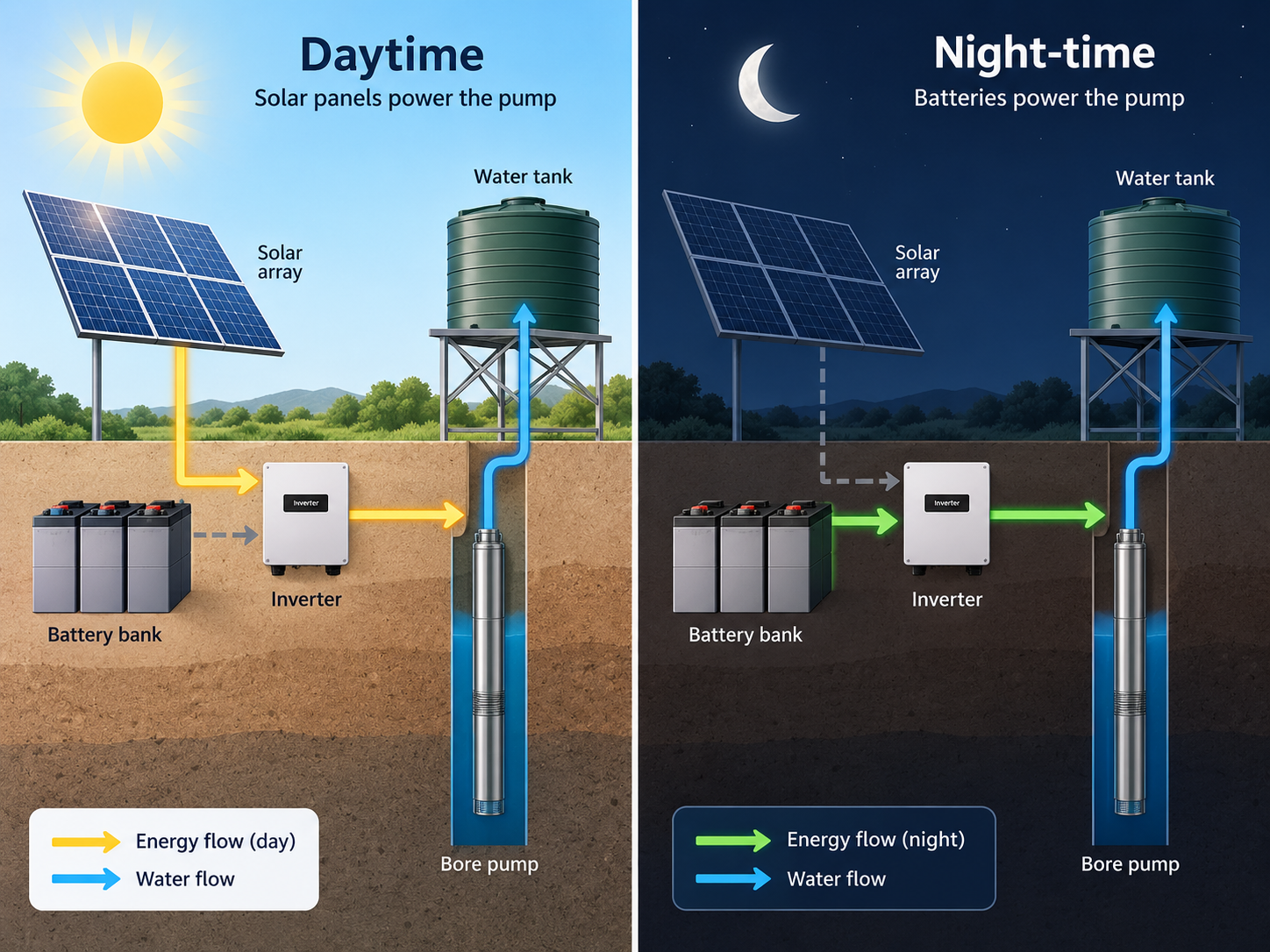
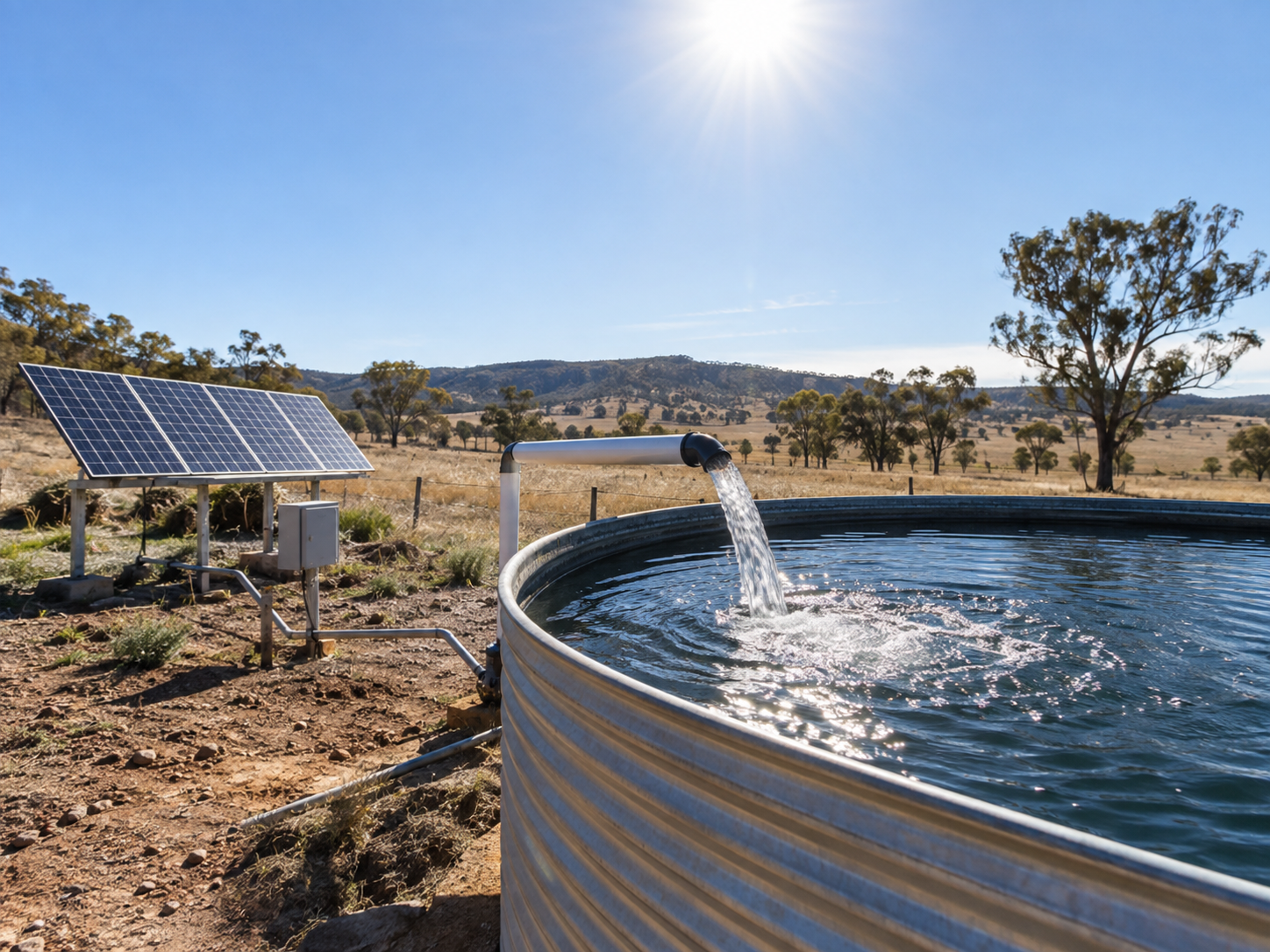
If a property has storage tanks, we may be able to run the pump during the middle of the day when solar production is strong, reducing the amount of stored battery energy needed for pumping later.
The tank effectively allows us to store water when energy is more readily available, then use that water later without needing to start the pump each time demand occurs.
This can be particularly useful for properties with irrigation, stock watering or other regular water demands because water storage gives us more flexibility over when the electrical load occurs.
It won’t suit every property because livestock needs, irrigation schedules and household pressure requirements can dictate timing. Where the system allows it, however, daytime pumping can reduce overnight electrical demand and reliance on battery storage.
5 Bore Pumps Change Solar Array Requirements
Once we know the pump’s running power and daily hours, we add that energy to the property’s overall load profile. That can change the required solar array, especially where water is pumped regularly for stock, irrigation or large tanks.
We avoid sizing solar from household consumption alone and then treating the bore as an extra appliance later. If the pump adds a substantial daily energy load, the solar array needs enough generation capacity to cover that demand while still restoring the battery energy used overnight.
Our Queensland off grid system design guide explains why we balance generation with battery capacity, inverter capability, weather and overlapping loads rather than focusing on panels alone.
6 Cloudy Weather Changes Generator Backup Planning
We also plan for days when water demand stays high but solar production drops. Farms and rural homes can still need pumping through several cloudy days, so generator backup may need a clearly defined role.
We don’t want the generator doing routine work because the system was undersized. In our view, it should remain backup for unusual weather, seasonal demand or unexpected load increases rather than becoming part of normal weekly operation.
We decide whether the generator is there to charge batteries, support the inverter during heavy demand or only come on under rare conditions. When the generator, inverter charger and controls are planned together, the system can recover without making fuel use an everyday habit.
7 Future Water Use Can Change Today’s Design
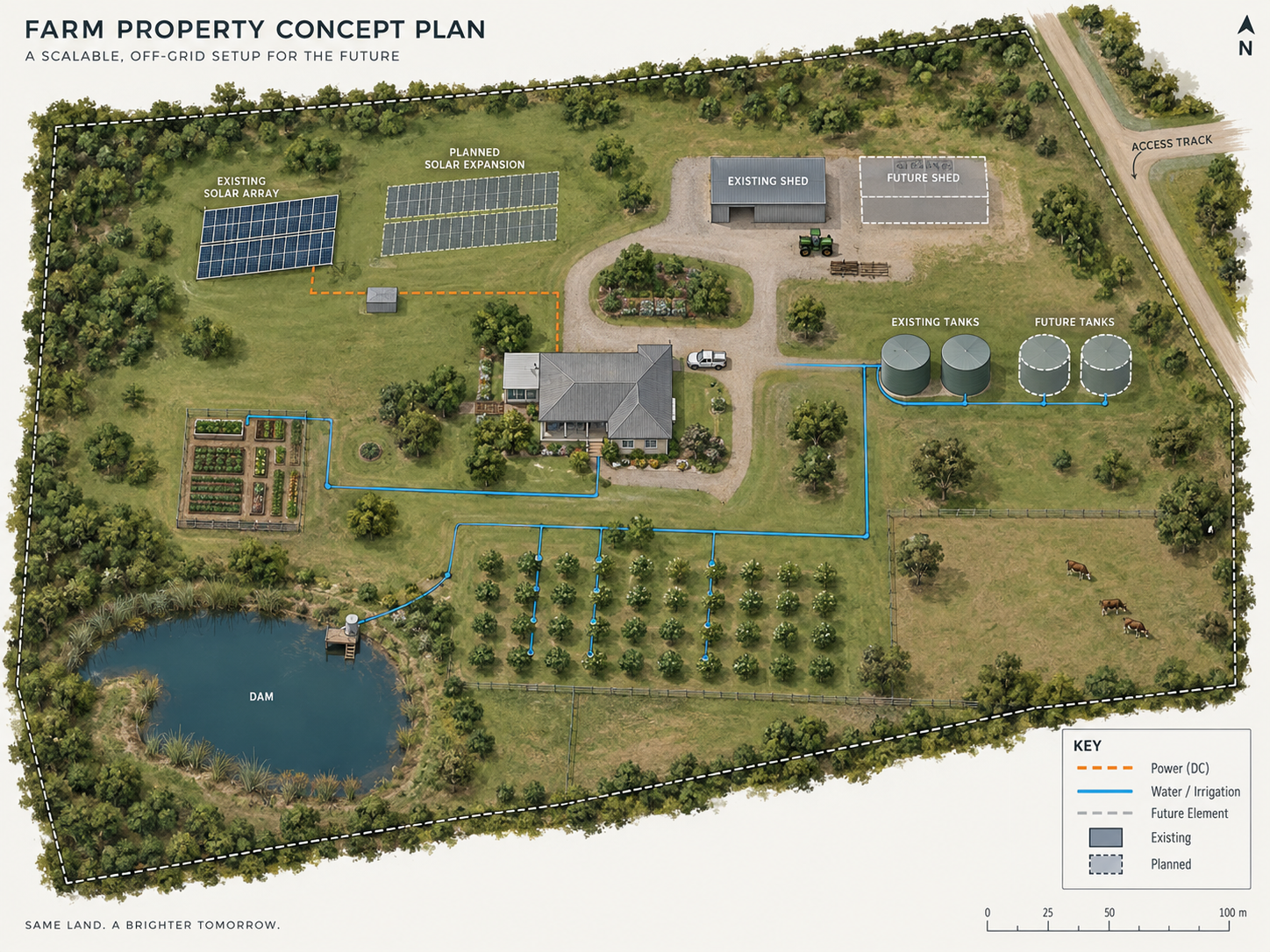
We’ve learned that rural properties rarely stay exactly the same. A home may start with one bore and one tank, then later add troughs, irrigation, another shed, a workshop or a second pump.
That is why our off grid solar design process looks beyond the minimum load needed today. We ask about likely future changes even when they may be years away.
That helps us consider spare inverter capacity, space for extra battery storage, room for more panels and switchboard allowances. It doesn’t mean buying every future component now.
We simply want the first system to leave a sensible pathway for expansion so later changes don’t force a major redesign.
What We Ask Before We Size a Bore Pump System
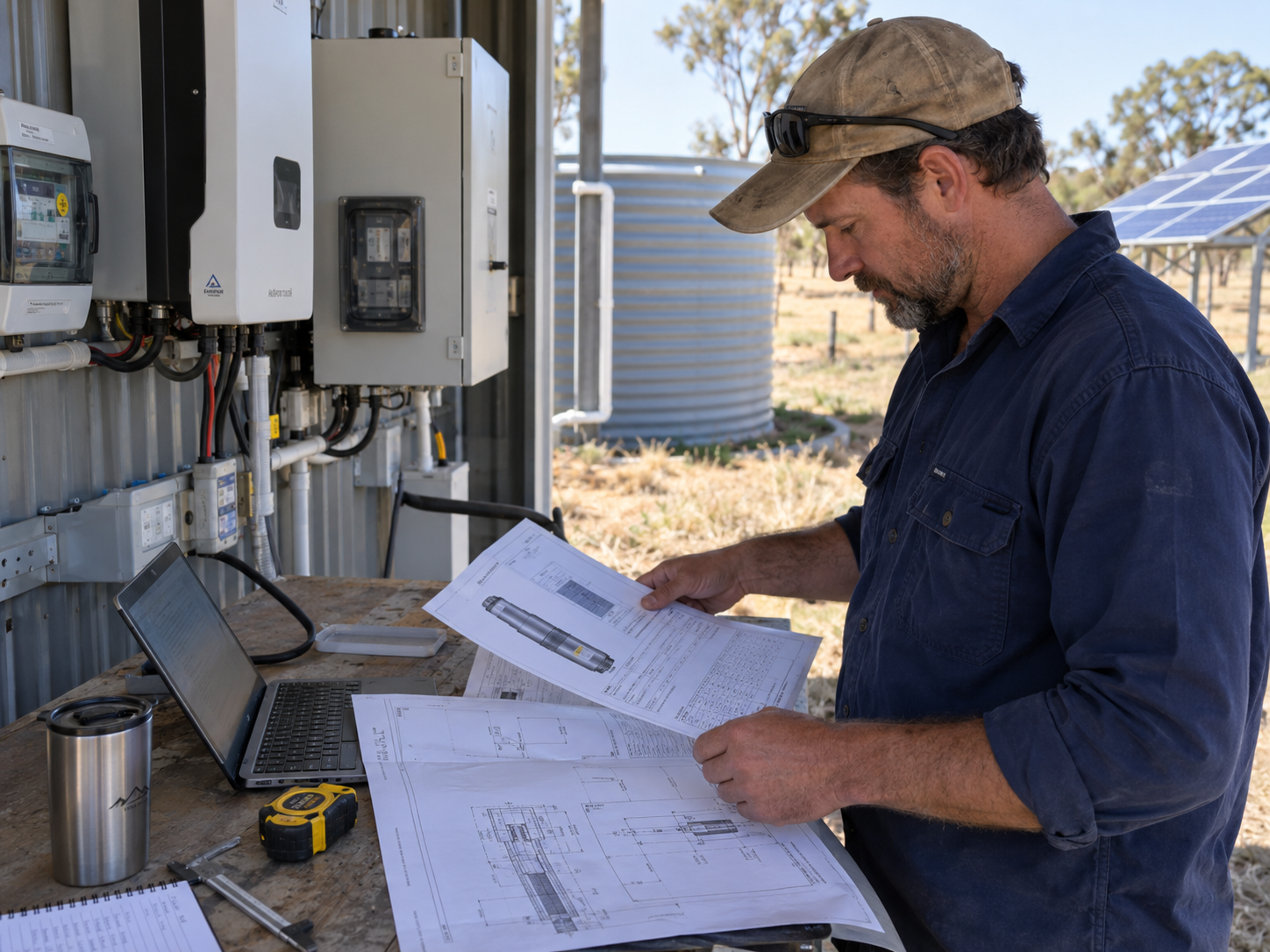
Before we design around a bore, we want more than the pump brand. These are some of the key inputs we look at:
| Input | Why It Matters |
|---|---|
| Motor rating | Helps determine running power requirements |
| Voltage | Confirms compatibility with the electrical system |
| Starting method | Helps us assess starting current and inverter surge requirements |
| Expected run time | Shows how much energy the pump may use each day |
| Bore depth | Helps us understand the pumping conditions |
| Pumping head | Affects how hard the pump needs to work to move water |
| Tank size | Helps determine how much flexibility there is around pump timing |
| Daily water requirement | Helps estimate how long and how often the pump needs to run |
| Irrigation or stock watering needs | Shows when additional water demand may occur |
| Other large electrical loads | Helps us assess what may operate at the same time as the pump |
Together, these details help us assess inverter sizing, daily energy use and the likely solar array requirement.
Queensland Government guidance on agricultural energy use also highlights the importance of matching and optimising irrigation systems to their actual requirements. Our quote process follows the same principle by asking about appliances, property type and future demand before equipment is selected.
Why We Look at the Whole Property, Not Just the Pump
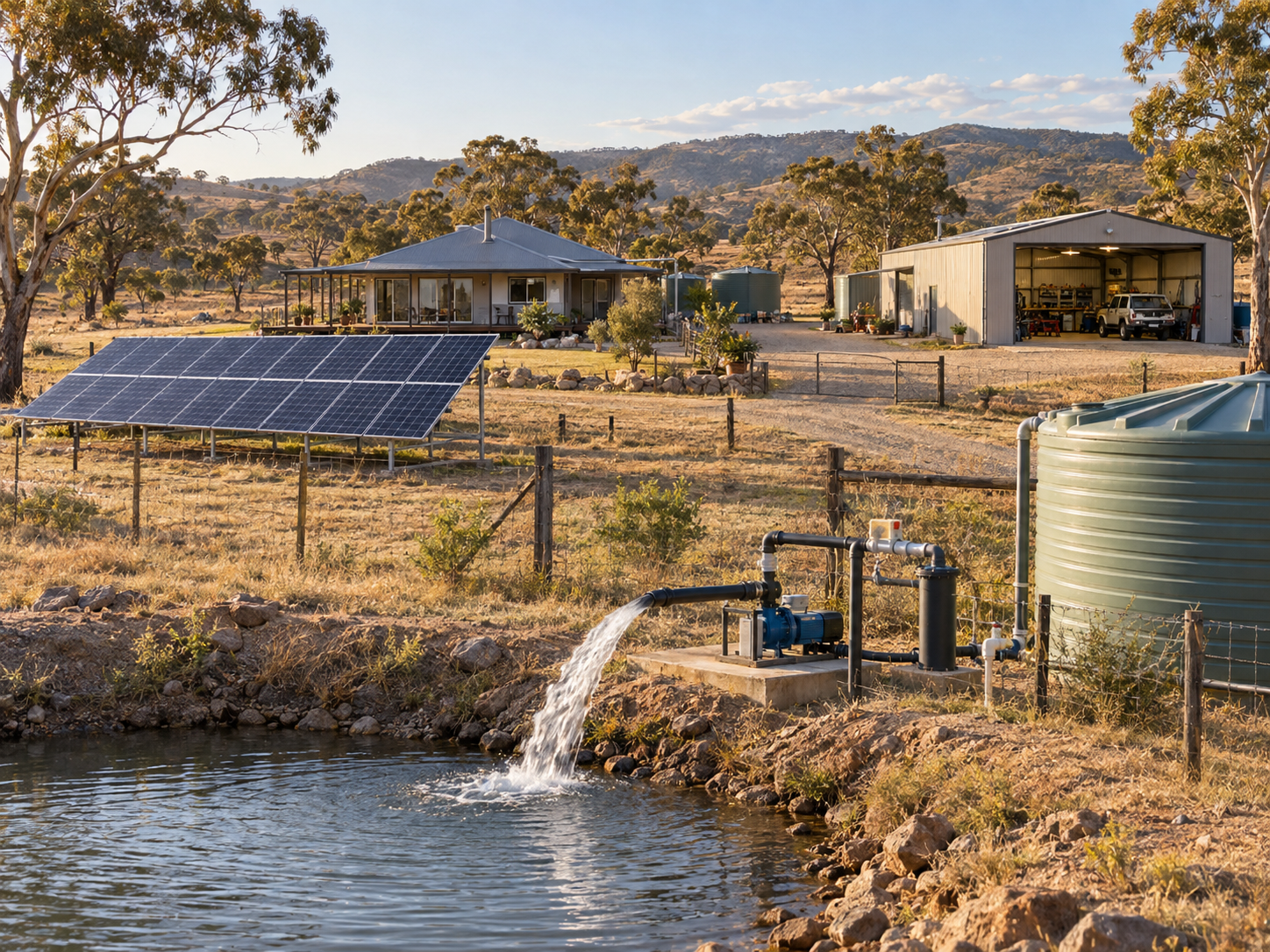
A bore rarely operates in isolation, which is why we look at the whole property before making a recommendation.
One of our Cunnamulla projects, for example, was designed around household loads as well as water pumps and workshop equipment. You can see the system details in our Cunnamulla off grid project.
That real-world load mix is why a pump can’t be assessed from a motor plate alone. We need to understand what else may start at the same time, how much solar is available, how the batteries recover and whether future farm or household loads are likely to increase.
That is the difference between sizing one component and designing a complete off grid power system.
Plan the Water Load Before It Becomes a Power Problem
When we design an off grid property, we want the water system and electrical system to work together from day one.
Bore pumps affect surge demand, inverter sizing, daily energy use, battery storage, the solar array, operating schedules and generator backup.
Those issues are manageable when we know about them early, but they can become expensive when the pump is added after the power system has been locked in.
If you’re building, upgrading or adding a bore on a rural Queensland or Northern NSW property, we can work through the pump specifications, water requirements and future loads before equipment is chosen.
At Stand Alone Power Systems, we design around how your property actually needs to work.
Frequently Asked Questions
Can a Bore Pump Run From Off Grid Solar?
Yes, we can design an off grid solar system around bore pumps, but the best setup depends on how the pump needs to operate. Some systems are designed mainly around daytime solar production, while a household off grid system may run the pump through the inverter along with the rest of the property.
We look at the motor, starting demand, run time, water storage and whether pumping must continue when solar production is low. If the same system also powers refrigeration, air conditioning or workshop tools, we assess everything as one load profile.
That is why we prefer to start with the actual pump specifications instead of assuming every bore behaves the same way.
Will a Bigger Battery Fix Bore Pump Problems?
Sometimes more battery storage helps, but we don’t assume it will solve the real issue. If the inverter can’t handle the motor’s start-up demand, adding battery capacity may leave the problem exactly where it was.
If the solar array is too small to replace the energy used each day, a larger battery may simply take longer to recharge. We also look at the pump, controls and operating schedule because an inefficient setup can push extra demand onto the electrical system.
In practice, we get better results by checking the motor, inverter, batteries, generation and controls together before deciding what needs to change. A bigger battery helps only when battery capacity is genuinely the limiting factor.
Should a Bore Pump Run During the Day?
Where the water system allows it, we often prefer to run a bore pump during strong daylight hours because the solar array can supply more of the load directly. That can reduce how much energy needs to pass through the batteries and make daily energy management easier.
A storage tank can help because we can pump water while solar production is high, then use the stored water later.
We don’t force this approach where it doesn’t fit, though. Stock demand, irrigation timing, pressure requirements or household use may require pumping at other times. We look at the complete water schedule first, then decide whether daytime pumping is practical for the property.