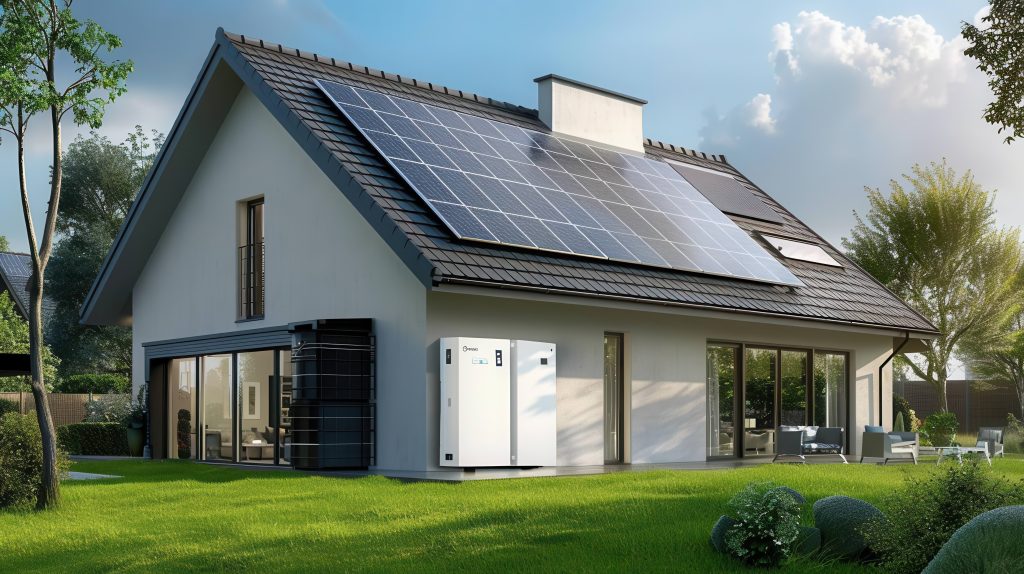
For anyone looking to live off grid, power a shed, workshop or tiny home, choosing the right battery is one of the most important decisions in the whole system.
Your battery stores the energy generated by your solar array and determines how reliably the property can operate at night, during cloudy weather and when solar production drops.
For Queensland and Australian off grid systems, understanding the differences between battery chemistries and brands such as BYD, Pylontech and PowerPlus can make system planning much easier.
Why the Battery Matters in an Off Grid Solar System
A battery is more than a box that stores electricity. In an off grid system, it keeps lights, appliances, pumps and equipment operating when the solar array is not producing enough energy.
Unlike a grid connected system, an off grid property depends heavily on its battery bank, so an unsuitable or undersized battery can mean increased generator use or insufficient stored power.
A correctly selected battery system can:
- Help protect the system from excessive charging or deep discharge
- Provide reliable stored energy for day to day use
- Allow additional storage capacity to be considered as energy needs change
Lithium vs Lead Acid Batteries
Lithium Batteries
Lithium batteries are commonly used in modern off grid solar systems because they offer high usable capacity, compact installation and strong cycle performance.
Some of the main advantages include:
- Higher usable depth of discharge compared with many traditional lead acid systems
- Long cycle life when correctly specified and operated
- High charging and discharging efficiency
- Compact modular designs available for many residential and rural applications
Battery options commonly considered in Australia include:
- BYD Battery Box LV Flex modular battery storage suitable for compatible expandable systems
- Pylontech US5000 modular lithium battery storage commonly used in homes, sheds and other off grid installations
- PowerPlus lithium batteries Australian battery storage options with local support
Lead Acid Batteries
Lead acid batteries generally have a lower upfront purchase price, but they are heavier, provide less usable capacity for the same rated storage and can require more maintenance depending on the battery type.
- Lower usable depth of discharge compared with many lithium systems
- Shorter cycle life depending on battery type, usage and charging conditions
- Flooded lead acid batteries may require ongoing maintenance such as checking electrolyte levels
For many new Queensland off grid installations, lithium batteries are now commonly considered because of their usable capacity, cycle performance and modular design.
How to Size Your Off Grid Battery
Battery sizing is critical. An undersized battery bank can result in frequent generator use, while an oversized system can add unnecessary upfront cost.
- Calculate daily energy usage Add up the energy used by appliances, lighting, pumps and other equipment each day
- Choose an autonomy target Decide how long the property should operate without strong solar production
- Allow for usable capacity Battery chemistry and manufacturer requirements determine how much of the rated storage should be routinely used
Example
- A tiny home uses around 6 kWh per day
- Three days of autonomy would require around 18 kWh of usable stored energy
- The installed battery capacity would then need to allow for the battery’s recommended usable depth of discharge and other system losses
This calculation is only a starting point. Solar recovery, seasonal weather, generator backup and peak power demand also need to be considered.
Comparing Popular Battery Options in Australia
BYD Battery Box LV Flex
- Design Modular battery system intended for compatible scalable installations
- Strength Additional battery capacity can be considered as system requirements increase
- Best suited to Homes or workshops where future storage expansion is part of the system plan
Pylontech US5000
- Design Modular rack mounted lithium battery storage
- Strength Widely used in compatible residential and off grid systems
- Best suited to Small to medium off grid properties with appropriately designed storage requirements
PowerPlus Lithium Batteries
- Design Australian battery storage options available in different configurations
- Strength Local support and suitability for compatible stand alone power installations
- Best suited to Rural homes, sheds, workshops and other systems where local product support is valued
Things to Consider Before Buying
- Warranty and support Check the warranty terms, local support arrangements and any installation requirements before choosing a battery
- Expandability If future energy demand may increase, consider whether compatible battery modules can be added later
- Battery management system The BMS helps manage charging, temperature, protection and communication with compatible system equipment
- Efficiency and usable capacity Compare how much of the rated battery capacity is actually available for normal use
- Lifetime value Consider upfront cost alongside expected usable energy, cycle life, replacement planning and support
Tips for Off Grid Success
- Allow enough solar generation The battery bank needs sufficient solar input to recharge after overnight use and poor weather
- Monitor energy use System monitoring can help owners understand battery state of charge and daily consumption
- Plan backup power A generator can provide additional support during extended periods of low solar production
- Use proper system design Battery capacity needs to be matched with the solar array, inverter, peak loads and required autonomy
Choosing a Battery That Fits the Property
The right off grid battery is the one that matches the property’s energy use, available installation space, inverter system and required level of reliability.
Battery systems from manufacturers such as BYD, Pylontech and PowerPlus provide different options for modularity, storage capacity and system integration. The best choice depends on the complete stand alone power system rather than the battery brand alone.
Talk to Us About Off Grid Battery Storage
At Stand Alone Power Systems, we design battery storage as part of the complete off grid system.
We assess daily energy use, peak loads, solar generation, required autonomy, inverter compatibility and future expansion before recommending a battery configuration.
If you are planning a shed, workshop, tiny home, rural property or full time off grid residence, we can help determine the battery capacity and system design that suit the way the property will actually use power.