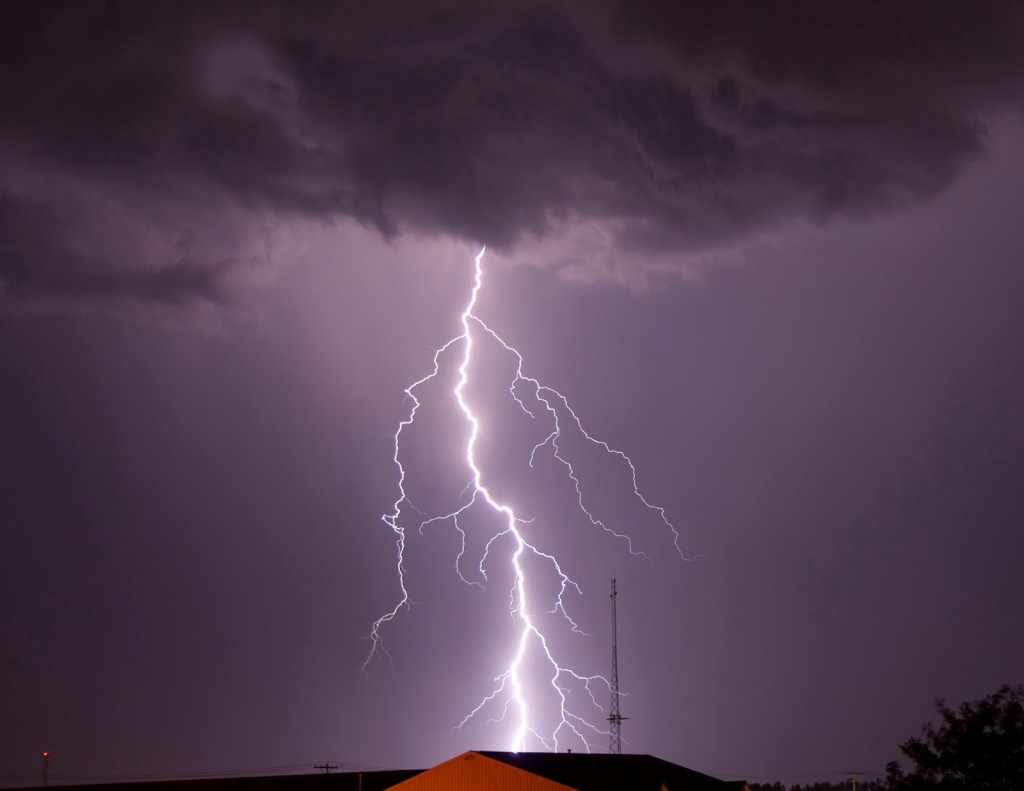
One nearby lightning strike can cause serious damage to an off grid solar power system. If you are close to town, that may mean an expensive repair. For a remote property, it can also mean being without power for an extended period while parts and technicians are organised.
Both direct and indirect lightning strikes can affect solar equipment. Direct strikes are less common but can cause severe damage to panels, inverters and other upstream components. Indirect strikes are more likely and can introduce high voltage surges into the system through cabling and connected equipment.
How Lightning Can Affect an Off Grid Solar System
Indirect lightning strikes can push high voltages into the off grid power system through electrical conductors and connected components.
This can damage:
- Solar panels
- Solar inverters
- Charge controllers
- Cabling and conductors
- Other connected electrical components
High voltage surges can also create dangerous sparking, which is another reason surge protection should be considered as part of the overall system design.
What Does a Lightning Arrestor Do?
Lightning arrestors, also known as surge protection devices, are designed to limit the amount of excessive voltage that reaches sensitive electrical equipment.
They work by responding to sudden voltage spikes and diverting or limiting the surge before it can pass further into the system.
The exact protection level depends on the device, where it is installed and the electrical characteristics of the system.
Why Surge Protection Matters More Off Grid
For a remote off grid property, a damaged inverter or charge controller can create more than an inconvenience.
- Replacement parts may need to be shipped long distances
- Service technicians may not be immediately available
- The property may depend entirely on the system for refrigeration, pumps, communications and household power
- Generator backup may need to operate for much longer than intended while repairs are completed
Protecting major components from electrical surges can therefore play an important role in maintaining system reliability.
Choosing the Right Lightning Arrestor
There are different surge protection products available, and the right choice depends on the system design.
Important considerations include:
- Where the device will be mounted
- The voltage of the circuit being protected
- Whether protection is required on the AC side, DC side or both
- How easily the device can be inspected or replaced
- Availability of replacement parts
Surge protection should be selected as part of the complete system rather than treated as an isolated accessory.
MidNite Solar Lightning Arrestors
Stand Alone Power Systems has used MidNite Solar lightning arrestors as part of off grid system designs because of their suitability for solar applications and the ability to install them where their operating status can be inspected.
MidNite Solar offers arrestors in different voltage ratings so the protection device can be matched to the electrical characteristics of the system.
Depending on the model, features can include:
- Use with suitable AC and DC circuits
- Different voltage ratings for different applications
- Visible status indicators
- External mounting options that make inspection easier
Protecting a Long Term Off Grid Investment
An off grid solar system represents a significant investment in solar panels, batteries, inverter equipment, control systems and electrical infrastructure.
That equipment is expected to operate for many years, often in remote environments where repairs can be difficult and expensive.
For that reason, surge protection should be considered alongside other system protections such as:
- Appropriate circuit breakers and fuses
- DC and AC isolation
- Correct system earthing
- Suitable cable protection
- Battery and inverter protection requirements
Lightning Protection Should Be Part of the System Design
Stand Alone Power Systems incorporates surge protection into off grid system design where appropriate because protecting the major electrical components is part of maintaining long term reliability.
The required protection will vary depending on the property, array layout, equipment locations, cable runs and local conditions.
A properly designed system should consider lightning and surge protection from the beginning rather than adding it as an afterthought once the equipment is already installed.
Talk to an Experienced Off Grid Installer
If you are building a new off grid system or reviewing the protection on an existing installation, we can assess the solar array, inverter equipment, battery system and electrical layout to determine what surge protection should be considered.
At Stand Alone Power Systems, we design off grid solar systems around the complete property rather than treating each component separately.